If you are selling a luxury home in Greenwich, strategy matters as much as the property itself. Even in a market with limited inventory, high-end buyers are selective, timing is nuanced, and small decisions around pricing, presentation, and exposure can affect your final result. This guide walks you through how to prepare, price, launch, and negotiate with more confidence in today’s Greenwich market. Let’s dive in.
Why Greenwich Luxury Selling Is Different
Greenwich is not a typical resale market, and luxury homes should not be positioned like standard listings across Fairfield County. Recent reporting shows that Greenwich luxury is commonly defined at $5 million and above, with pricing behavior that differs by town and even by neighborhood, which is why local comparable sales matter more than broad county averages. According to the Brown Harris Stevens Q1 2025 luxury report, Greenwich led the region with 28 luxury closings in the first quarter of 2025.
That level of activity signals real demand, but it does not mean every home will sell quickly at any price. The Greenwich Realtors fourth quarter 2025 market update shows a townwide single-family median sale price of $3.15 million, an average of 70 days on market, and just 79 active single-family listings in February 2026, down 34.7% year over year. In other words, inventory is tight, but buyers still expect a home to be priced and presented with precision.
Start With Market-Ready Timing
For a luxury sale, the best launch date is usually the day your home is fully ready, not simply the first week of spring. While local luxury reporting points to spring as a favorable window because inventory is tight and cash-ready buyers are active, the same data also shows that pricing or presentation mistakes can slow momentum. A rushed launch can cost you more than waiting a few extra weeks to get the details right.
That is especially true at the upper end of the market, where first impressions shape buyer perception quickly. Once a listing is public, buyers and agents will compare it against the best available options in Greenwich, not against your future plans for improvement. Your goal is to enter the market with a polished, complete product from day one.
What to finish before launch
Before your home goes live, focus on the basics that support value and reduce friction:
- Declutter interior spaces
- Repair visible defects
- Refresh curb appeal
- Complete staging where needed
- Produce professional photography
- Create a detailed floor plan
- Prepare video or virtual tour assets
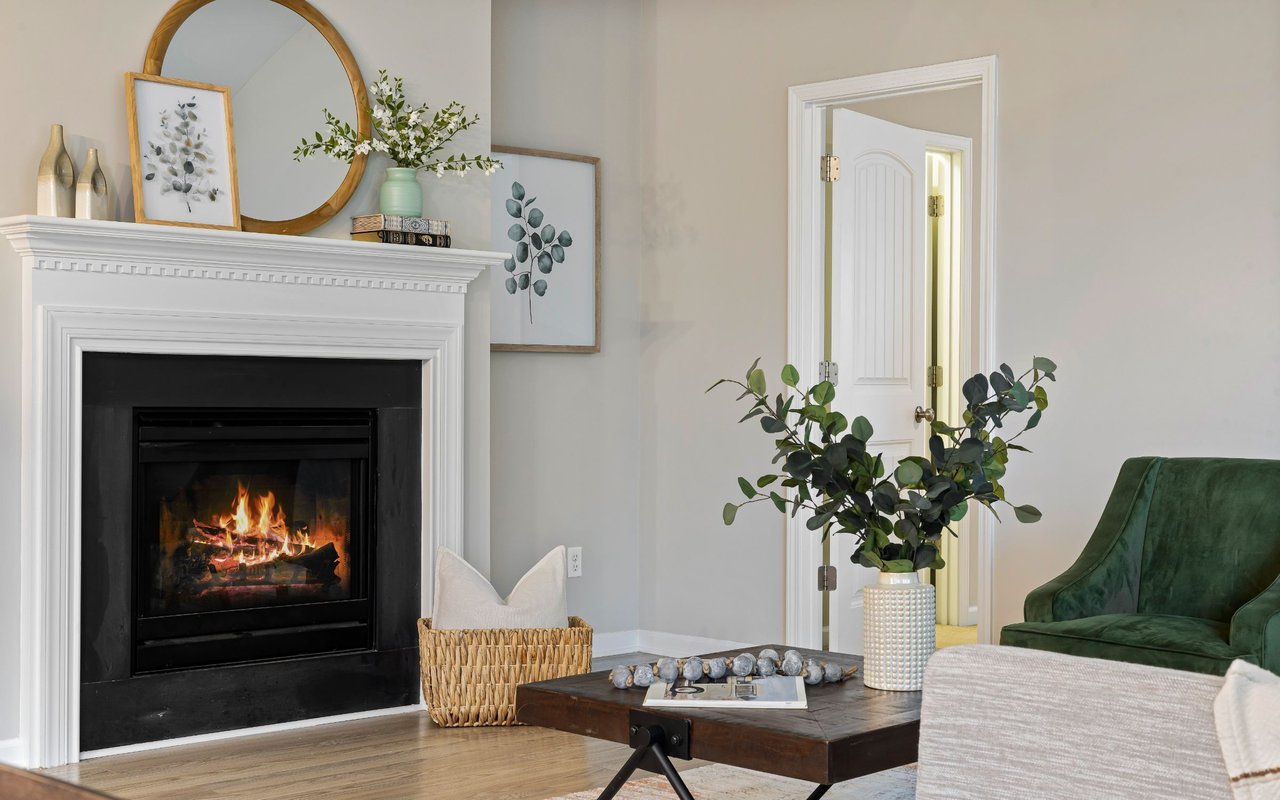
The reason is simple. In the 2025 NAR staging report, 29% of agents said staged homes saw a 1% to 10% increase in offered value, and 49% reported reduced time on market. Buyers also identified the living room, primary bedroom, and kitchen as the most important spaces to stage.
Price To Sold Data, Not Aspirations
Luxury pricing in Greenwich should be anchored to recent closed sales, especially hyper-local comparable properties. This is not a market where an aspirational list price automatically creates negotiating room. Strong homes can command strong numbers, but only when the ask is supported by condition, positioning, and relevant neighborhood data.
The evidence is clear in Greenwich luxury performance. The Brown Harris Stevens report found that in Q1 2025, 52% of luxury homes sold at or above asking, with an average list-to-sale ratio of 99.6%. That suggests the market rewards accurate pricing and clean execution more than speculative overpricing.
Why precise pricing matters
When a luxury home is priced correctly, you are more likely to:
- Capture early interest from qualified buyers
- Create stronger urgency during the first days on market
- Avoid extended market time that can weaken leverage
- Protect your final net by reducing the need for later price cuts
By contrast, a high initial ask can work against you if buyer response does not support it. Townwide average days on market reached 70 in 2025, which is a reminder that scarcity alone does not erase pricing mistakes.
Build A Strong Digital First Impression
Most luxury buyers will form an opinion about your home online before they schedule a private showing. In practice, that means your digital presentation is part of the product you are selling. Photography, floor plans, property details, and video are no longer optional at this level.
The 2025 NAR generational trends report found that buyers who used the internet rated photos as useful at 83%, detailed property information at 79%, floor plans at 57%, virtual tours at 41%, and videos at 29%. For a Greenwich luxury listing, those numbers support investing in a complete media package before the home is exposed to the market.
The digital assets that matter most
A well-prepared luxury listing should usually include:
- High-end professional photography
- Accurate and easy-to-read floor plans
- Detailed property descriptions
- Video and or virtual touring options
- Clear agent contact access for private inquiries
This approach gives buyers a more complete understanding of the property before they visit. It also helps attract serious interest from out-of-area and cross-border buyers who may begin their search remotely.
Use Privacy Strategically
For some Greenwich sellers, privacy is a real priority. That is especially true for public-facing homeowners, legacy estate owners, or anyone who wants to control early exposure. In those cases, a short off-market or broker-only phase can be useful, but it should be purposeful and time-boxed.
According to the 2025 NAR generational trends report, 91% of sellers used an agent and 88% of buyers purchased through an agent or broker. Even in a private sale scenario, professional distribution remains critical. Privacy works best when it is paired with a clear plan for targeted exposure, feedback, and a decision point for broader launch if needed.
When an off-market phase may make sense
A private preview period can be helpful if you want to:
- Limit public visibility at the start
- Test pricing with qualified buyers and brokers
- Gather feedback before a broader launch
- Reduce disruption from unnecessary showings
The key is not to let a private phase drift without direction. If feedback does not validate the asking price or if engagement is limited, widening exposure quickly may be the better move.
Consider Global-Ready Exposure
Not every Greenwich luxury home needs a full international campaign, but some listings benefit from being marketed in a way that is ready for a broader audience. That includes clear visuals, complete information, and distribution through connected professional networks. In the luxury segment, reach can matter, especially for trophy properties and unique estates.
The 2025 NAR international transactions report found that foreign buyers paid all cash 47% of the time. The same report notes that NAR works with more than 100 foreign real estate associations across 75-plus countries. For sellers, the takeaway is straightforward: broader buyer access can support stronger outcomes when the property and pricing justify it.
Evaluate Offers Beyond Price Alone
In Greenwich luxury, the best offer is not always the highest number on paper. Terms matter, and certainty matters. You should review price alongside financing strength, contingencies, timing, and the buyer’s ability to close smoothly.
That is especially important because cash remains a major force in this market. The Brown Harris Stevens luxury report found that 78% of homes over $4 million in Lower Fairfield County sold all cash in Q1 2025. A slightly lower all-cash offer with a cleaner path to closing may be stronger than a higher offer with financing risk or a long diligence period.
Compare offers with a full lens
When offers come in, look at:
- Purchase price
- Cash versus financing
- Contingencies
- Proposed closing date
- Flexibility on possession or rent-back, if needed
- Overall certainty of execution
A disciplined review process helps protect both your timing and your net proceeds.
Know Your Seller Costs Early
Luxury sellers in Greenwich should model costs before choosing a launch strategy. Your net proceeds are shaped not only by sale price, but also by taxes, commissions, preparation expenses, and holding costs during the listing period. Planning ahead makes it easier to evaluate pricing decisions and negotiation tradeoffs.
One major item is Connecticut conveyance tax, which is paid by the seller and reported on Form OP-236 when the transfer is recorded. According to the Connecticut tax expenditure report, current residential state rates are 0.75% up to $800,000, 1.25% on the portion from $800,000 to $2.5 million, and 2.25% above $2.5 million. For many Greenwich luxury sales, that top bracket becomes highly relevant.
Update tax and carrying cost assumptions
You should also account for the town-wide revaluation completed in 2025, which is effective on the July 1, 2026 tax bill. As the Town of Greenwich revaluation page explains, the revaluation does not determine your sale price, but it can affect tax expectations and holding-cost calculations. That makes updated net sheets an important part of your pre-listing planning.
A Practical Greenwich Luxury Selling Sequence
In today’s market, selling well is often a matter of sequencing. The strongest results usually come from doing the right things in the right order, rather than trying to rush to market. A clear strategy can help you protect privacy, support value, and respond to real buyer feedback.
A practical framework often looks like this:
- Prepare the home fully before launch
- Price to recent neighborhood sold data
- Create polished digital and in-person presentation assets
- Use a short private phase only if privacy is a true priority
- Broaden exposure quickly if response does not support the ask
- Evaluate offers based on both price and certainty
- Track your net with taxes and carrying costs in view
In a market as nuanced as Greenwich, that kind of disciplined approach can make the difference between a listing that lingers and one that closes on strong terms.
If you are considering a sale and want a tailored plan built around your property, timing, and privacy needs, The Sarsen Team can help you evaluate the market, refine your positioning, and prepare for a more confident launch.
FAQs
What is considered a luxury home in Greenwich, CT?
- Recent local luxury reporting commonly defines Greenwich luxury as homes priced at $5 million and above, though valuation should still be based on specific neighborhood comparable sales.
How long does it take to sell a luxury home in Greenwich, CT?
- Timing varies by property and pricing, but Greenwich had a townwide average of 70 days on market in 2025, while segments of the luxury market moved much faster when pricing and presentation aligned.
Should you stage a luxury home before selling in Greenwich, CT?
- Yes, staging can help. NAR reported that many agents saw staged homes receive stronger offers and spend less time on market, with living rooms, primary bedrooms, and kitchens being especially important.
Should you list a Greenwich luxury home privately first?
- A short private phase can make sense if confidentiality is important, but it should be structured, targeted, and limited in time so you can expand exposure if buyer response is not strong.
What seller taxes should you plan for when selling a luxury home in Greenwich, CT?
- Sellers should account for Connecticut conveyance tax, along with commissions, preparation costs, and carrying costs, because these items can materially affect net proceeds on higher-priced sales.